

Floor Installation in Winter Park, FL
Choosing flooring installers in Winter Park starts with finding a team that can explain the work beneath the surface, not just show attractive finished rooms. This article covers how to evaluate installers, discuss materials, compare written estimates, and prepare for installation. Use it to turn a broad search into a clear project plan, with fewer unanswered questions before work begins.
How do you choose flooring installers in Winter Park?
Choose flooring installers in Winter Park by checking their experience with your selected material, requesting a site assessment, and comparing detailed written scopes. Ask who will perform the work, how preparation will be handled, and who takes responsibility for problems after installation. Treat photographs and reviews as starting points for questions rather than substitutes for a project discussion.
Start by confirming that the company serves your address. Then describe the rooms involved, your existing flooring, and whether the home will remain occupied during the work. Ask prospective installers to explain how they would approach those conditions before requesting a final proposal.
Use these questions to guide your conversations:
Relevant experience: Can you show completed installations using the material and layout I am considering?
Project supervision: Who will be my contact, and who makes decisions on site?
Preparation: What will you inspect before confirming the installation method?
Accountability: What written workmanship coverage do you provide, and how do I request service?
For hardwood projects, preparation deserves particular attention. Shaw’s installation guidance identifies material inspection, subfloor assessment, and layout planning as distinct parts of the process—not simply steps to rush through before fastening boards. (shawfloors.com)
Match the flooring discussion to your daily routine
Before choosing a color, write down what each room needs to handle. Include pets, rolling chairs, frequent spills, outdoor access, and your preferred cleaning routine. Share that list with both the flooring supplier and installer so the conversation focuses on suitability rather than appearance alone.
Instead of asking which material is universally “best,” ask for product-specific answers:
Hardwood: What environmental conditions, installation method, and maintenance instructions apply to this exact product?
Luxury vinyl or laminate: Where is it approved for use, and what do its water-related claims actually cover?
Tile: What supporting layers and preparation does the proposed assembly require?
Carpet: How will seams, transitions, cushion, and door clearances be addressed?
Do not assume a waterproof label removes the need to investigate conditions below the flooring. Pergo specifically identifies moisture testing and subfloor preparation as important even for waterproof flooring installations. (pergoflooring.com)
Take samples home before making your final selection. Compare them beside cabinets, trim, and adjoining floors in different lighting. Ask the installer to review the selected product before ordering, rather than discovering an installation concern after delivery.
Give subfloor preparation its own conversation
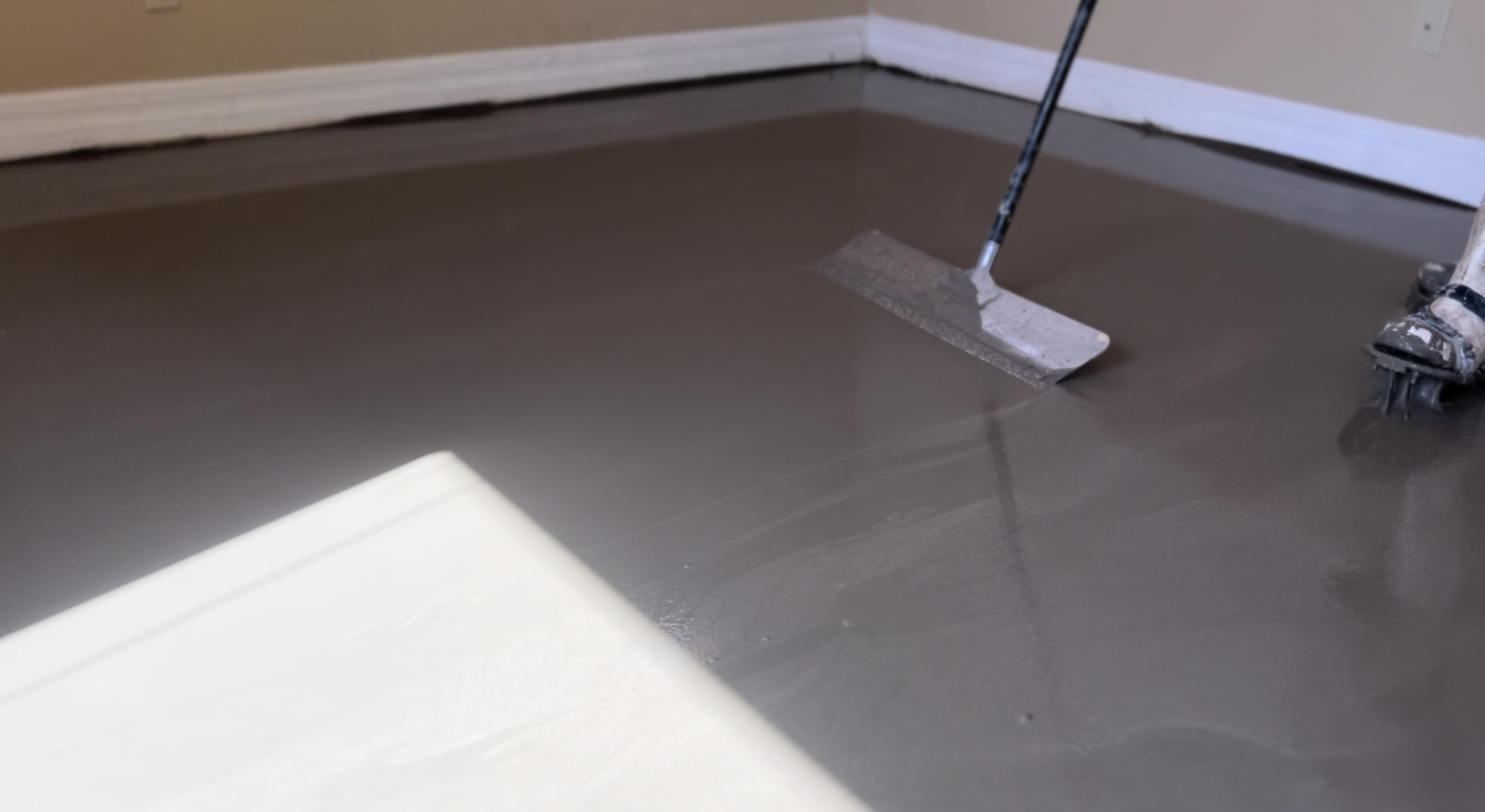
The subfloor is the supporting surface beneath the finished flooring. For tile, Home Depot’s preparation guidance emphasizes that this structure must support the tile and the materials used to install it. Its guidance also distinguishes the subfloor from underlayment, which sits above it. (homedepot.com)
Ask the installer to explain what can be assessed during the initial visit and what may remain unknown until the existing floor is removed. Request a written process for handling discoveries: photographs, an explanation of the proposed repair, and your approval before additional work proceeds.
Moisture and conditioning need product specific decisions
Wood responds to its environment. The National Wood Flooring Association explains that it can gain moisture and swell in humid conditions or lose moisture and shrink in dry conditions. That makes the home’s indoor environment part of the flooring discussion, not an unrelated maintenance issue. (woodfloors.org)
For wood flooring, ask how the installer will assess compatibility between the material and the installation environment. NWFA guidance describes acclimation, or conditioning, as aligning those conditions; it is not simply a universal waiting period applied to every project. Request the selected manufacturer’s instructions rather than relying on a verbal rule of thumb. (nwfa.org)
What should a flooring installation estimate include?
A flooring installation estimate should identify the selected product, measured work area, installation scope, preparation allowances, finishing details, and exclusions. It should also explain payment terms and how additional work receives approval. You need enough detail to compare what each installer is promising — not just the total at the bottom.
Ask each company to address the same categories:
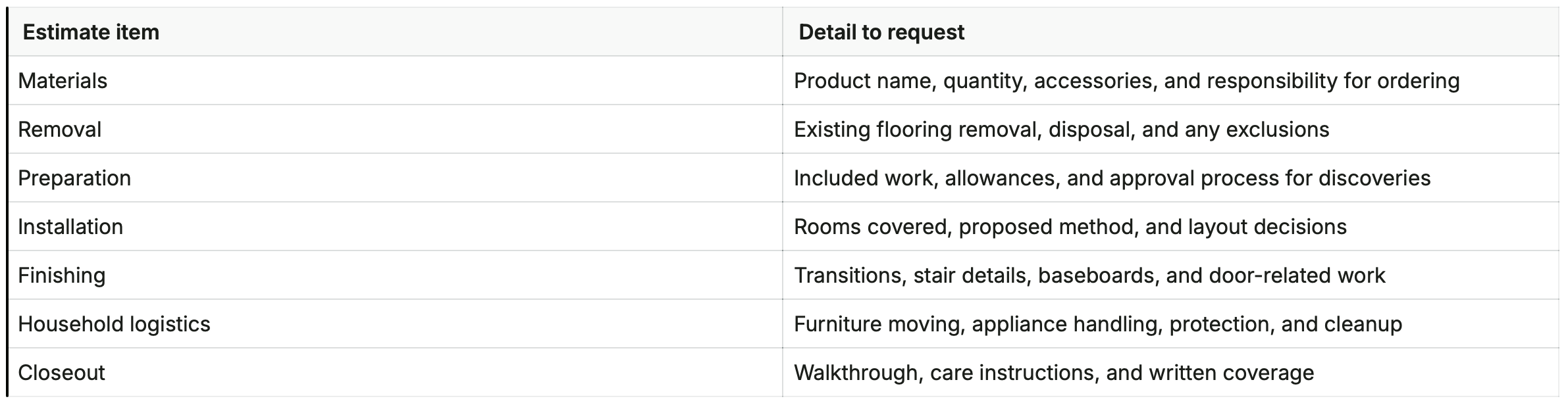
Avoid comparing a supply and install proposal with a labor only quote as though they cover the same job. Ask each installer to separate fixed commitments from items that cannot be priced until inspection or removal. If a line says “prep as needed,” request clarification about what is included and how anything beyond it will be charged.
For your Winter Park flooring project, set a total budget that includes the surrounding work you intend to authorize. Keep optional upgrades separate from necessary preparation so you can make trade-offs without losing track of the installation scope.
Plan the layout before installation day
Bring layout decisions into the planning conversation rather than leaving every choice to the crew on arrival. Ask where the flooring will start, how it will meet adjoining rooms, and where transitions are proposed. Discuss visible areas such as entryways, long sightlines, stair landings, and fireplace edges.
With hardwood, Shaw describes a planning step called “racking,” where boards are laid out before fastening, using material from several cartons to consider the finished appearance. Ask how your installer will review natural variation and the proposed arrangement for your selected product. (shawfloors.com)
If you have a preferred direction or pattern, have it recorded in the project notes. Review transition samples alongside the main flooring rather than choosing them from a description alone. The goal is to agree on the details you will notice every day before installation makes changes more involved.
Prepare your home and agree on the schedule
Ask for a schedule that separates delivery, preparation, installation, and return to normal use. Request confirmation of any product-specific conditioning or waiting requirements. Do not treat delivery day and installation day as interchangeable milestones.
Home Depot’s hard-surface installation process, for example, includes measuring, reviewing the quote, preparing the installation area, and delivering materials. Its preparation instructions require clearing furniture and wall decor, while furniture-moving arrangements have specific limits. Use that as a prompt to clarify your own installer’s responsibilities rather than assuming everything is included. (homedepot.com)
Before work begins:
Confirm access. Agree on entry arrangements, parking, delivery access, and approved work areas.
Clear agreed spaces. Remove personal belongings and establish who handles heavy or fragile items.
Plan household routines. Arrange routes around the work and separate spaces for children and pets.
Protect remaining rooms. Ask how the crew will manage debris, tools, and movement through the home.
Set communication rules. Identify who can approve changes and how those approvals will be documented.
For an occupied home, ask whether the work can be divided into stages. Have the installer explain any implications for access, furniture movement, and
Finish with a documented walkthrough
Arrange a final walkthrough while you can discuss the work with the responsible contact. Compare the finished rooms with the agreed scope, including transitions, trim, and any separately authorized changes. Note questions in writing and agree on the next step for each unresolved item.
Request the care instructions for the exact flooring installed, along with product information and written workmanship coverage. Ask when furniture, rugs, cleaning, and normal traffic are permitted under the applicable instructions. Keep these documents with the proposal and change approvals so you have one project record.
The strongest starting point is a clear conversation, not a rushed commitment. Shortlist installers who explain their process, arrange an assessment, and compare proposals against the same checklist. That gives you a practical basis for choosing who will handle your Winter Park flooring installation.