

Tile Contractors in Orlando FL
Choosing tile contractors in Orlando, FL, starts with checking relevant experience, installation methods, and the details behind each estimate — not simply comparing prices. This article explains how to evaluate candidates, discuss repairs, and prepare a project brief that makes bids easier to compare. Use it to turn your shortlist into a hiring decision grounded in evidence rather than promises.
How do you choose the right tile contractor in Orlando?
Choose a tile contractor who can demonstrate experience with projects like yours, explain the proposed installation method, and provide references and documentation. The Tile Council of North America recommends interviewing contractors, checking references, and requesting proof of insurance and installation qualifications. Start there before discussing colors, patterns, or a start date. (tcnatile.com)
When reviewing Orlando tile contractors serving Orlando, FL, ask to see work that matches your project. For a shower, request shower examples rather than relying on kitchen backsplash photos. For a large floor, ask about comparable layouts and preparation challenges; the Ceramic Tile Education Foundation recommends examining portfolios for projects similar to your own. (ceramictilefoundation.org)
Use the same interview checklist for every candidate:
Relevant work: Request photographs and references for installations with similar materials and scope.
Installation approach: Ask which recognized method and manufacturer instructions will guide the work.
Qualifications: Request evidence supporting any certification or training claims.
Insurance: Ask for documentation rather than accepting a verbal assurance.
References: Contact previous customers about communication, workmanship, and issue resolution.
These checks follow industry guidance for evaluating qualified installation labor. Treat the answers as a starting point for comparison, not as a substitute for reviewing the written proposal. (ceramictilefoundation.org)
Define the project before requesting estimates
Before contacting flooring contractors in Orlando, write down the rooms involved, the existing surfaces, your preferred tile, and whether you want repairs or complete replacement. Include photos and approximate dimensions, clearly marked as preliminary. Ask each contractor to confirm measurements and conditions during the site visit.
Separate your must-haves from decisions that remain open. You might require a coordinated transition into an adjoining room but still be flexible about tile size. That distinction gives the contractor useful direction without asking them to guess your priorities.
Create a short project brief covering:
Locations: Identify each floor, wall, backsplash, or shower included.
Materials: Share product details or samples if you have selected them.
Existing problems: Photograph cracks, loose pieces, stains, and damaged grout.
Access: Note occupied rooms, furniture, parking, and material-storage options.
Responsibilities: Specify who should supply tile, remove fixtures, and arrange cleanup.
Timing: Explain preferred dates and any periods when work cannot happen.
Send the same brief to every bidder. Ask them to identify assumptions and exclusions in their response. Keep a copy beside each estimate so you can spot where proposals differ from your request.
The work beneath the tile deserves attention
A useful conversation about tile installation in Orlando should cover the supporting surface, not just the finished appearance. Industry guidance identifies substrate preparation and movement joints as meaningful parts of an installation proposal. Ask the contractor to explain what must happen before setting the first tile. (tcnatile.com)
Surface preparation and layout
Ask how the installer will evaluate the existing floor or wall and determine whether correction is needed. Florida Tile emphasizes following substrate-flatness and installation guidance, particularly when working with larger tiles and offset patterns. The practical question is whether the selected tile and layout suit the surface — or whether preparation must come first. (floridatile.com)
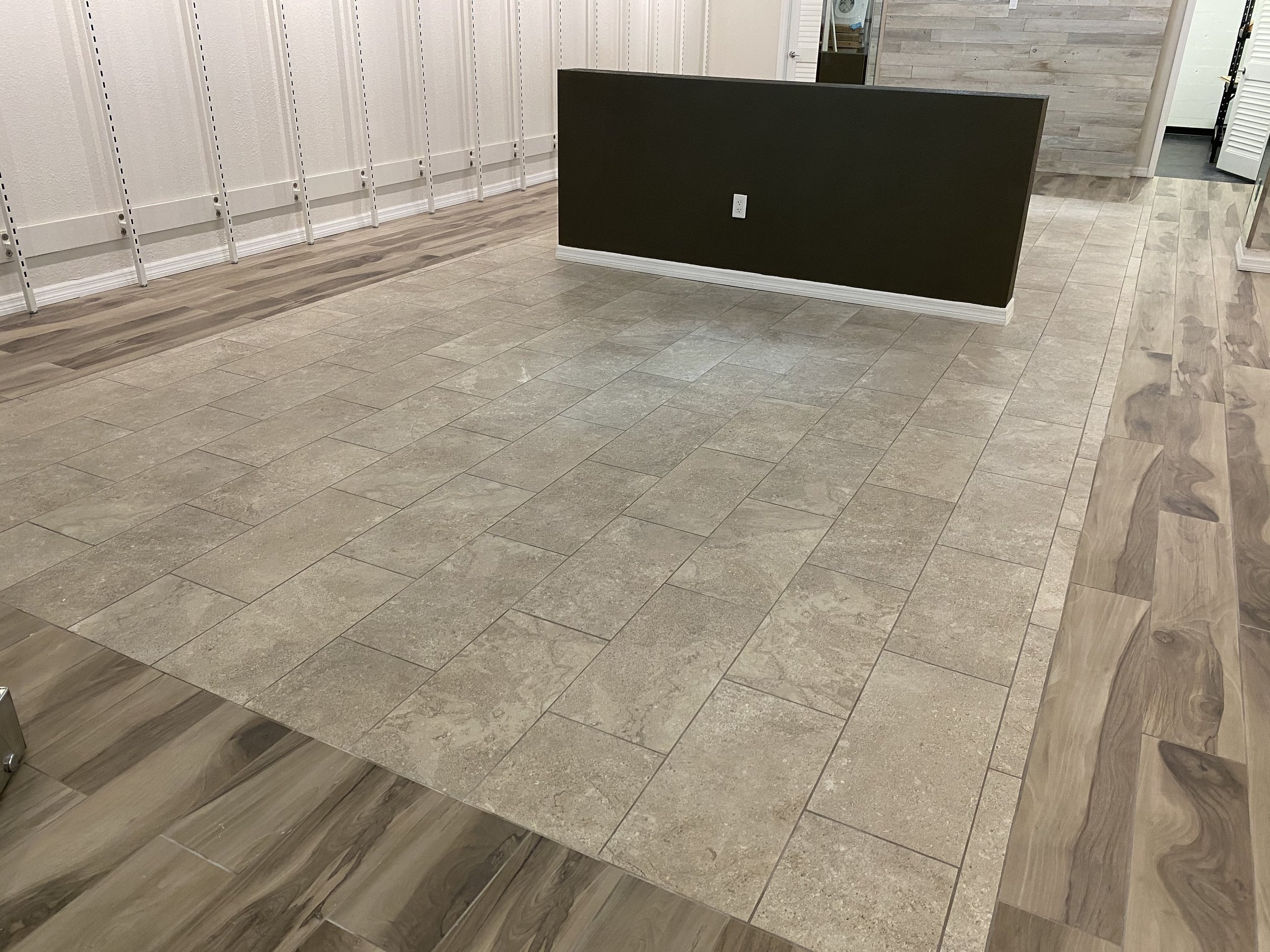
Request a layout discussion before installation begins. Have the contractor show proposed starting points, perimeter cuts, doorway transitions, and visible edges. Bring up any focal areas, such as a kitchen island or shower niche, so you can agree on priorities before materials are installed.
Movement joints and wet-area protection
Movement joints accommodate differences in expansion and contraction between tile and its supporting surface. The Tile Council of North America notes that sunlight, moisture, and exterior exposure affect movement-joint planning. Ask where these joints belong in your project and how they will be incorporated into the finished design. (tcnatile.com)
For showers, discuss waterproofing separately from tile and grout selection. MAPEI explains that tile and grout are not intended to serve as the primary waterproofing of a shower. Ask the installer to identify the proposed system and explain how its components will be installed according to manufacturer instructions. (cdnmedia.mapei.com)
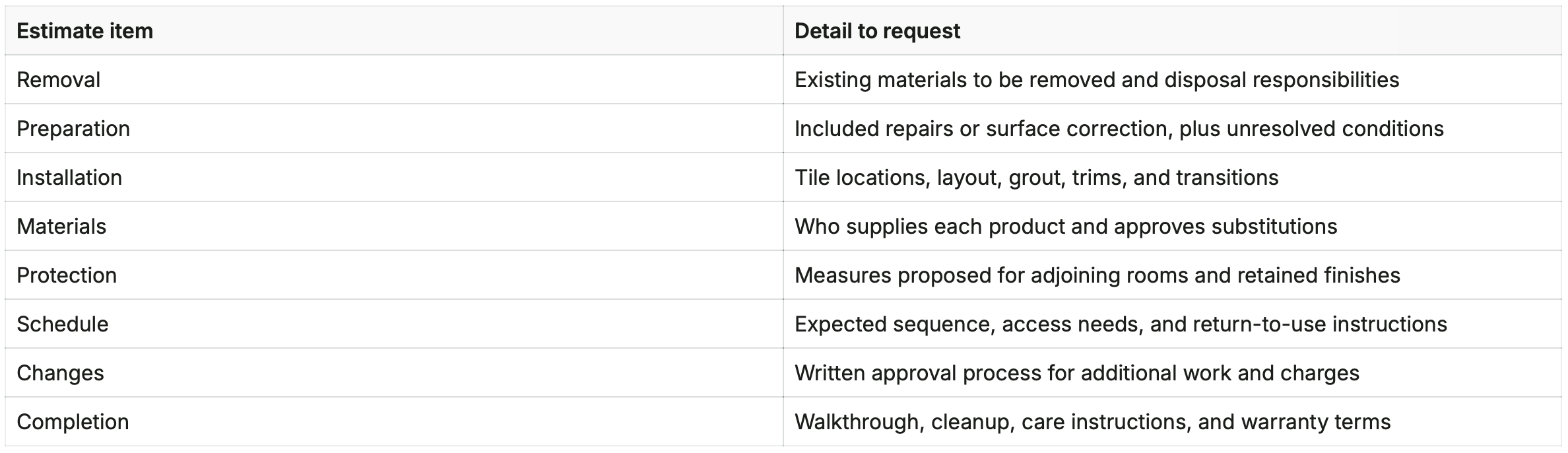
Treat missing information as a question to resolve, not an automatic reason to reject the contractor. Ask for revisions when a proposal leaves responsibilities unclear. Do not assume an appealing total includes everything you discussed verbally.
When is tile repair better than replacement?
Tile repair is worth evaluating when damage appears limited and an installer can identify and address its cause. Replacement deserves discussion when inspection reveals a broader problem or a localized repair cannot meet your goals. TCNA cautions that repairs may not last if the underlying cause of failure remains unresolved. (tcnatile.com)
When arranging tile repair in Orlando, document what you have noticed and when it began. Ask the contractor to distinguish observations from conclusions and explain what further investigation is needed. A hollow sound alone does not necessarily indicate imminent floor failure, according to TCNA, so avoid deciding the scope based solely on tapping tiles. (tcnatile.com)
Before approving a repair, request answers to these points:
What appears to have caused the damage?
What investigation supports that explanation?
Which tiles and adjacent materials will be disturbed?
Can you review the proposed replacement tile and grout match?
What limitations or unresolved conditions will remain?
Ask for the repair scope and its limitations in writing. If the contractor offers alternatives, request a plain language explanation of what each option addresses. Keep any spare original tiles available for inspection rather than assuming a replacement will match.
Verify credentials without making licensing assumptions
Do not assume every tile only project requires a Florida state contractor license. Florida’s Department of Business and Professional Regulation lists tile and flooring among examples of work that do not require state construction contractor licensure. Other activities, including certain plumbing or structural work, can require licensed professionals. Confirm requirements for the complete project with the appropriate authority. (www2.myfloridalicense.com)
Certification is a separate consideration. The Ceramic Tile Education Foundation’s Certified Tile Installer program evaluates installation knowledge and hands-on skills, and its directory lets homeowners search for participating installers. CTEF also makes clear that no credential guarantees every project’s outcome. Use verified qualifications alongside references, relevant work, and the proposed installation approach. (ceramictilefoundation.org)
When someone describes their team as Orlando flooring experts, ask what supports that description. Request the name of the installer assigned to your project and verify any credentials being presented. Keep the conversation specific to the people and work involved.
Make the final decision with a clear written scope
Before signing, gather the final estimate, agreed material selections, layout decisions, payment schedule, and change approval process. Ask the contractor to resolve differences between the proposal and your project brief. Make sure you understand who to contact during installation and after completion.
The goal is not to find the most persuasive sales pitch. Choose a contractor whose proposal you understand, whose relevant work you have checked, and whose answers give you a clear picture of the job. A well-defined agreement turns your research into a practical plan for moving forward.