

Choosing the Right Local Bath Remodelers
Choosing local bath remodelers in Orlando, FL means comparing more than finishes and a bottom-line price. Start with a clear project scope, verify each contractor’s background, and compare written proposals that describe the same work. This article helps you narrow the field, weigh bathing options, and plan a bathroom that fits your routines without overlooking installation details or ongoing care.
How do you choose reliable local bath remodelers in Orlando?
Choose a remodeler by checking applicable licensing, requesting proof of insurance, reviewing relevant projects, and speaking with previous customers. Then compare detailed written estimates rather than relying on a star rating or the lowest price. The Federal Trade Commission recommends checking credentials with state or county authorities and reading customer reviews critically. (consumer.ftc.gov)
A search for “local bath remodelers near me” is a starting point, not a qualification. Build a shortlist through referrals and local searches, then ask each company to explain its experience with projects like yours. Request examples that match your intended scope: a shower replacement, an accessibility-focused renovation, or a complete bathroom redesign.
Use these checks before scheduling a final consultation:
Verify business details: Confirm the company name, contact information, and applicable license or registration through the relevant authority.
Request current insurance documentation: Ask about liability coverage and workers’ compensation where applicable.
Contact recent references: Discuss workmanship, communication, cleanup, and how unexpected issues were handled.
Review complaint history: Look beyond testimonials selected for the company’s own website.
Ask references one revealing question: “What happened when something did not go as planned?” Listen for concrete examples rather than general praise.
Define the problem before choosing the finish
Before requesting bath remodel services, write down what you want the renovation to solve. Perhaps the tub is rarely used, storage is awkward, or the room no longer suits someone’s mobility. Give each contractor the same description so their recommendations address your priorities.
Separate your notes into three groups: essential repairs, daily-use improvements, and optional upgrades. For example, you might prioritize investigating a recurring leak, improving shower access, and adding reachable storage before choosing decorative fixtures. Ask each bidder to explain what belongs in the base proposal and what can be priced separately.
Bring photographs, rough measurements, and a few style references to consultations. Include details that photographs cannot show: where water collects, which cabinet doors clash, and what feels uncomfortable during your morning routine. Ask for a layout discussion before committing to individual products.
Which bath remodel services fit your needs?
The right service depends on whether you want to replace a bathing fixture, change how you bathe, or rethink the whole room. Ask prospective contractors to distinguish a tub or shower replacement from a tub-to-shower conversion and a full renovation. Have them explain exactly which surrounding surfaces, plumbing connections, and repairs their proposal includes.
Tub and shower replacement
If you want to keep the existing layout, request a replacement proposal alongside any broader redesign. Ask whether demolition, wall preparation, fixtures, doors, disposal, and finishing work are included. Require the estimate to identify the proposed products, not simply promise a “new shower.”
Tub-to-shower conversions and accessible bathing
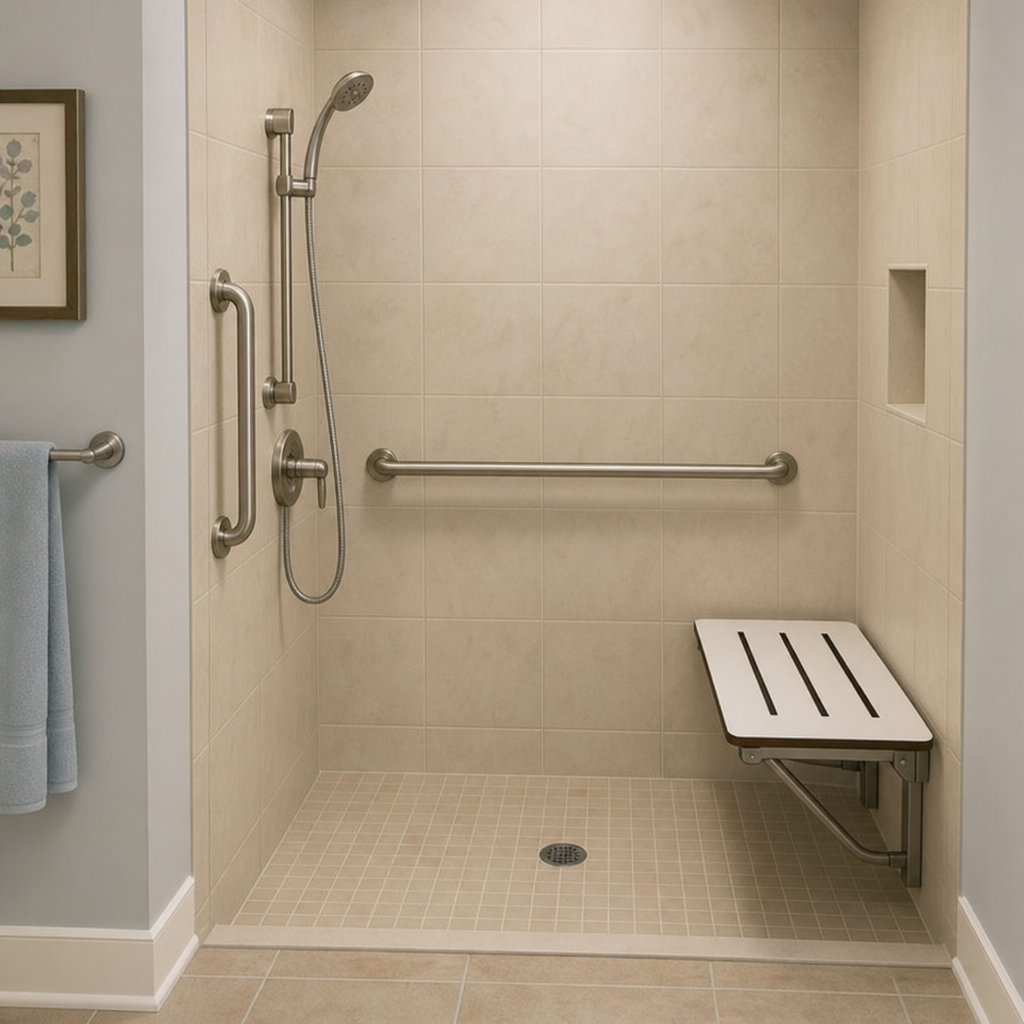
For easier entry, discuss a low-threshold or curbless shower, seating, a handheld showerhead, and appropriately positioned grab bars. AARP includes these types of features in its bathroom accessibility guidance. Review the complete arrangement rather than treating one feature as the entire accessibility plan. (aarp.org)
If you prefer bathing, ask to see a walk-in tub demonstration. Practice the entry motion, check the seat and controls, and request written information about filling, draining, cleaning, and any optional jets. Describe the intended user’s needs instead of assuming that “walk-in” automatically means a suitable fit.
Match the team to the scope
When interviewing local bathroom designers, ask how they would arrange storage, lighting, fixtures, and clearances around your routines. Request a drawing that shows door swings and the space around each fixture. Walk through the proposed layout together, including where you would reach for towels or set down toiletries.
If you are considering local kitchen and bath remodelers for several rooms, ask who will coordinate the bathroom work and whether the same project manager oversees both spaces. For a bathroom-only specialist, ask where its scope stops. Clarify whether you must arrange painting, electrical work, flooring, or other finishing tasks separately.
Have prospective bathroom renovation experts identify everyone responsible for your project. Ask who measures, orders materials, supervises subcontractors, and handles questions after installation. Put those responsibilities into the project documentation rather than leaving them as assumptions.
Compare materials through maintenance and moisture control
Request samples and care instructions before choosing a tub or wall system. Acrylic and enameled cast iron are both established bathtub options; manufacturers describe acrylic as lightweight and cast iron as particularly durable. Compare the specific products proposed for your home rather than assuming every product within a material category performs identically. (kohler.com)
For shower walls, ask to see seams, corners, shelves, and fixture openings—not just the main surface. Request an explanation of how those details will be installed and maintained. Compare tile and panel options using the same questions about cleaning products, joints, repairs, and warranty coverage.
Treat antimicrobial marketing carefully. EPA explains that many treated products contain preservatives intended to protect the product itself, not users against disease-causing organisms. If a surface is advertised with Microban or another antimicrobial treatment, request the specific claim and care instructions; do not interpret the label as a substitute for cleaning. (epa.gov)
Moisture management deserves equal attention. EPA recommends addressing leaks and condensation, protecting wall cavities from water, and exhausting bathroom air outdoors rather than into an attic. Ask how the proposed work addresses these issues, especially if your bathroom stays damp between uses. (epa.gov)
For a humid or coastal location, describe any persistent condensation or corroded fixtures during the site visit. Ask which products the contractor recommends for those conditions and request supporting manufacturer guidance.
Compare proposals without losing sight of the budget
Ask every shortlisted contractor to quote the same agreed scope. A useful written proposal identifies work, materials, price, scheduling, cleanup, permits, inspections, and the process for changes. Be cautious about a low bid that leaves major parts of the job unexplained.
Use this comparison checklist to find gaps:
Preparation: What demolition, disposal, surface preparation, and protection of nearby rooms are included?
Products: Are models, finishes, fixtures, doors, and accessories identified?
Excluded work: Who handles repairs or finishing tasks outside the quoted scope?
Unexpected conditions: How will discoveries be documented, priced, and approved?
Completion: What cleanup, inspection, and final walkthrough are included?
Warranty: What written coverage applies to products and installation?
Set aside part of your budget for possible changes, but ask the contractor to explain the risks specific to your bathroom rather than accepting an unexplained allowance. If financing is offered, review its terms separately from the construction proposal and avoid signing a payment arrangement you do not understand.
Set expectations for installation and follow-up
Before signing, request estimated start and completion dates and clarify what could change them. Include verbal promises about timing and scope in the written agreement. Do not pay the entire project price upfront; check applicable local rules when reviewing the deposit and payment schedule. (consumer.ftc.gov)
Ask when the bathroom will become unavailable and what must happen before you can use it again. If a company advertises a rapid installation, request the conditions behind that timeline. Discuss material availability, preparation work, inspection arrangements, and how the team will notify you about delays.
Before handover, request a walkthrough and a care folder containing product information, warranties, and maintenance instructions. Ask the installer to demonstrate controls and explain cleaning requirements. Follow the instructions for the selected products: for example, Kohler recommends nonabrasive soap and water for its acrylic surfaces and regular cleaning of relevant spa components. (kohler.co.nz)
Choose clarity over pressure
For your home bath remodel, favor the proposal that makes responsibilities, products, costs, and next steps understandable. Use your shortlist to compare how thoroughly each team addresses the same priorities. Before committing, resolve unclear exclusions and make sure the written agreement reflects the bathroom you actually want—not simply the sales presentation you liked best.